Marketing Online Education Programs
Marketing online education programs requires a comprehensive, multi-channel approach that seamlessly integrates technical SEO, targeted paid advertising, and high-quality content generation. To successfully increase student enrollment in an increasingly crowded digital landscape, institutions must actively build semantic relevance, engage prospective students through automated digital campaigns, and meticulously optimize their program pages for modern search intent. By focusing heavily on the overall user experience and establishing a clear, unambiguous entity mapping strategy, educational organizations can rapidly scale their search visibility and expand their global digital footprint.
The Critical Importance of Digital Marketing for E-Learning Success
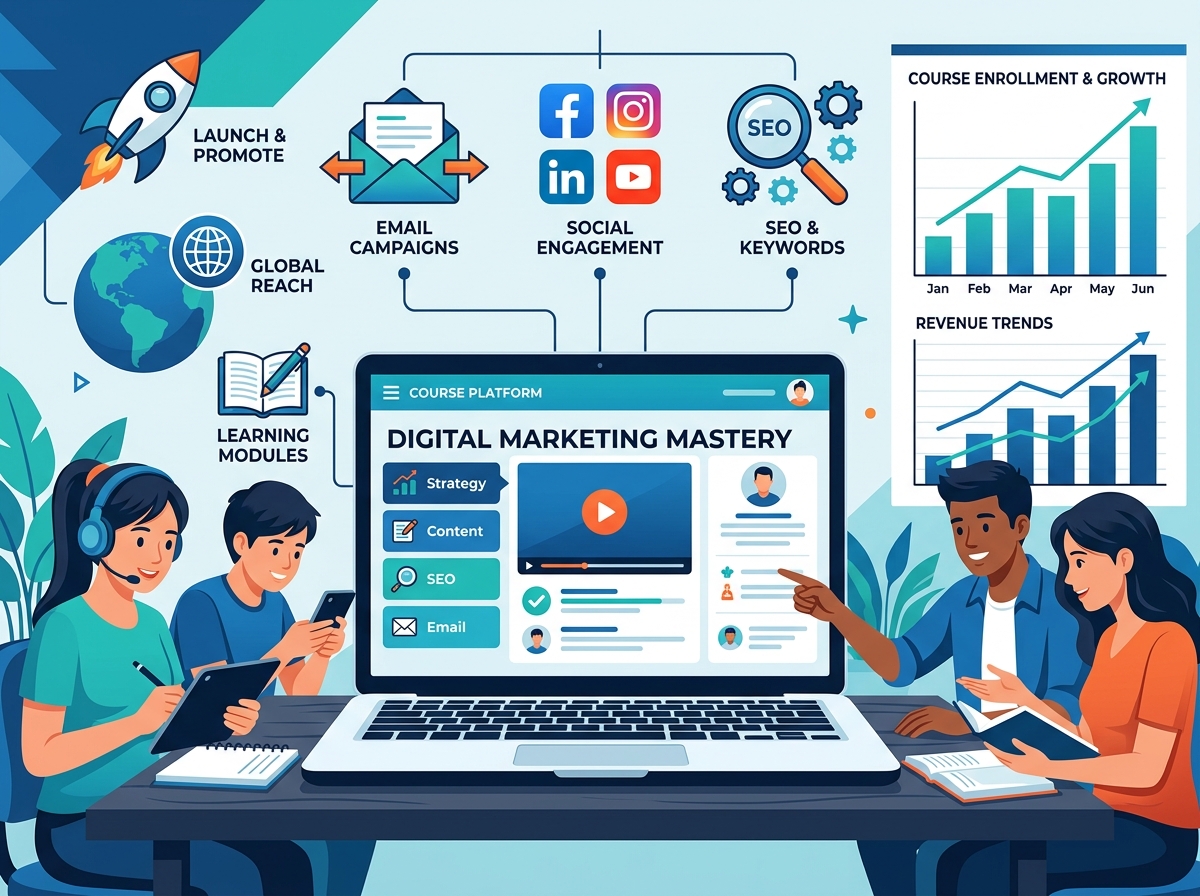
In today's highly competitive academic and corporate training landscape, developing a robust strategy for marketing online education programs is absolutely essential for long-term viability. With prospective students increasingly turning to search engines to discover, evaluate, and select their academic paths, universities and private academies must prioritize organic search visibility above traditional marketing mediums. The foundational research provided by leading academic experts like Ugur Demiray and Serdar Sever (ISBN: 9781609600747) deeply underscores the vital intersection of high-quality educational delivery and digital accessibility.
Developing a comprehensive, data-informed digital marketing strategy ensures that online education programs successfully reach the right target audience at the perfect moment in their decision-making journey. Prospective students expect seamless, intuitive digital experiences, from their initial program discovery phase all the way through to final application submission. Institutions that fail to adapt to these modern search heuristics, or those that maintain outdated, non-responsive web assets, risk losing their competitive edge to more agile, technologically advanced online academies.
Core Strategies for Scaling Student Enrollment Sustainably
1. Advanced Search Engine Optimization (SEO)
Technical SEO remains the undisputed bedrock of any successful digital campaign. By rigorously optimizing core web vitals, enhancing mobile responsiveness, and conducting deep entity extraction, institutions can dramatically improve their algorithmic PageRank. Building a logical, tightly nested semantic architecture helps search engine crawlers fundamentally understand the exact nature, difficulty level, and career value of your online courses, thereby ranking them higher for commercial queries.
2. Content Marketing and Semantic Relevance
Publishing high-quality, long-form content tailored specifically to complex student queries helps build critical E-E-A-T (Experience, Expertise, Authoritativeness, and Trustworthiness) signals. Prospective students frequently seek highly specific answers regarding tuition costs, regional accreditation, faculty credentials, and realistic career outcomes. By proactively addressing these topics with authoritative content, universities can easily capture valuable featured snippets and drive highly targeted, conversion-ready organic traffic.
3. Social Media and Community Engagement
Marketing online education programs must necessarily extend far beyond the boundaries of the primary institutional website. Leveraging diverse social media channels allows institutions to foster a genuine sense of community, share authentic student testimonials, and highlight notable faculty achievements. Engaging directly with prospective students on professional platforms like LinkedIn and Twitter builds trust, humanizes the brand, and encourages organic, peer-to-peer sharing which serves as a powerful endorsement.
Leveraging Data and Predictive Analytics
To continuously refine and improve your marketing strategies over time, educational institutions must rely heavily on comprehensive data analytics and predictive modeling. Monitoring granular user behavior, tracking micro-conversion rates, and analyzing on-page engagement metrics allows marketers to precisely identify friction points within the enrollment funnel. By utilizing advanced analytics tools, you can dynamically reallocate your marketing budget more effectively, ensuring a maximally efficient return on investment across all active channels.
For more detailed strategies on data integration and tracking, you should review our comprehensive guide on advanced analytics for higher education marketing.
Frequently Asked Questions (FAQ)
What are the most effective marketing strategies for online education?
The absolute most effective strategies consistently include SEO-optimized content marketing, highly targeted social media advertising, and automated email nurturing campaigns that are specifically designed to build trust and significantly increase overall student enrollment rates.
How can universities successfully increase online program enrollment?
Universities can effectively increase their enrollment numbers by rigorously optimizing their institutional website for clear user intent, highlighting unique program benefits and career outcomes unambiguously, and utilizing sophisticated, data-driven digital marketing to reach highly qualified prospective students.
Conclusion: Advancing Educational Reach in the Digital Age
Ultimately, marketing online education programs is not a one-time project, but rather an ongoing, iterative process that demands continuous optimization and strategic adaptation. By implementing strict, modern SEO protocols, dramatically expanding thin content pages, and focusing intensely on user-centric semantic structures, educational institutions can establish a commanding, authoritative digital presence. Prioritizing core E-E-A-T principles and intelligently building semantic relevance will not only dramatically improve search engine rankings but also consistently attract highly qualified, deeply motivated students eager to advance their careers through your programs.